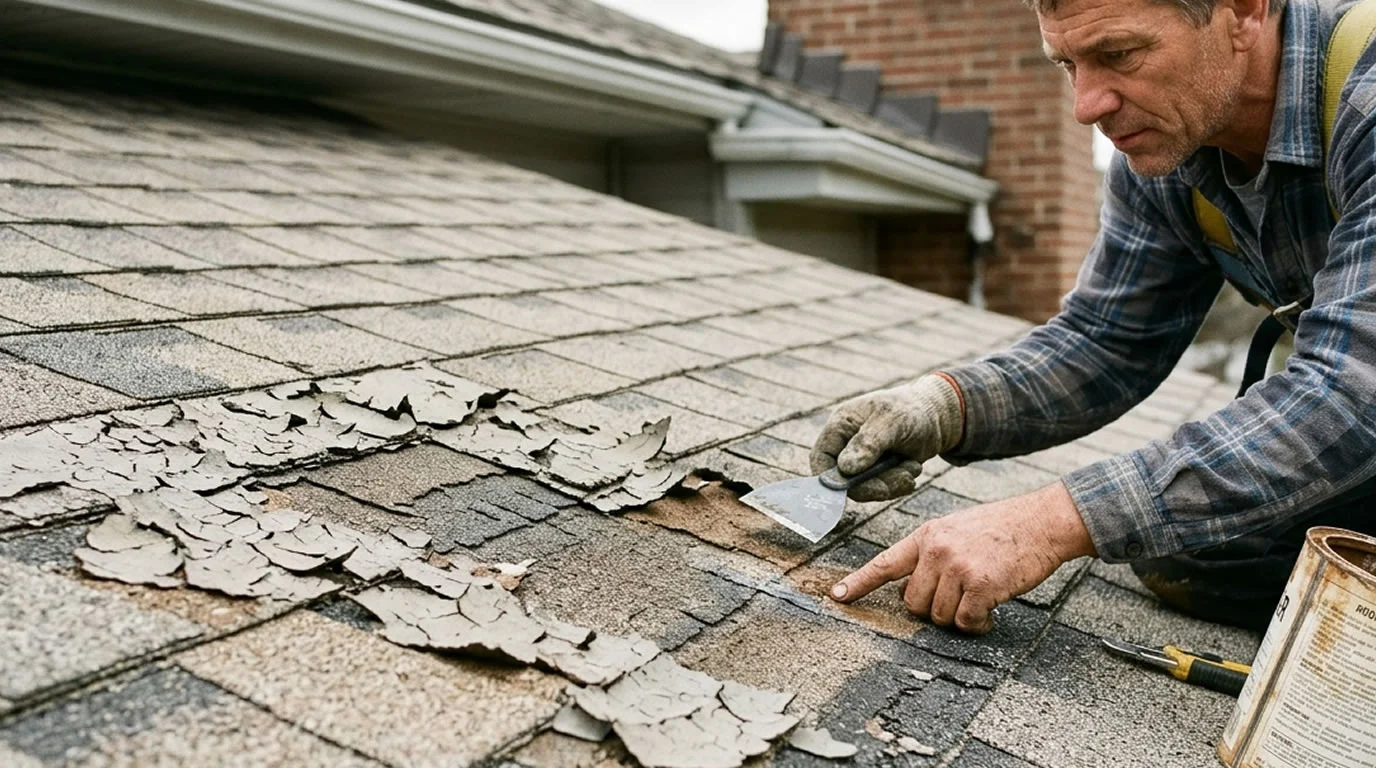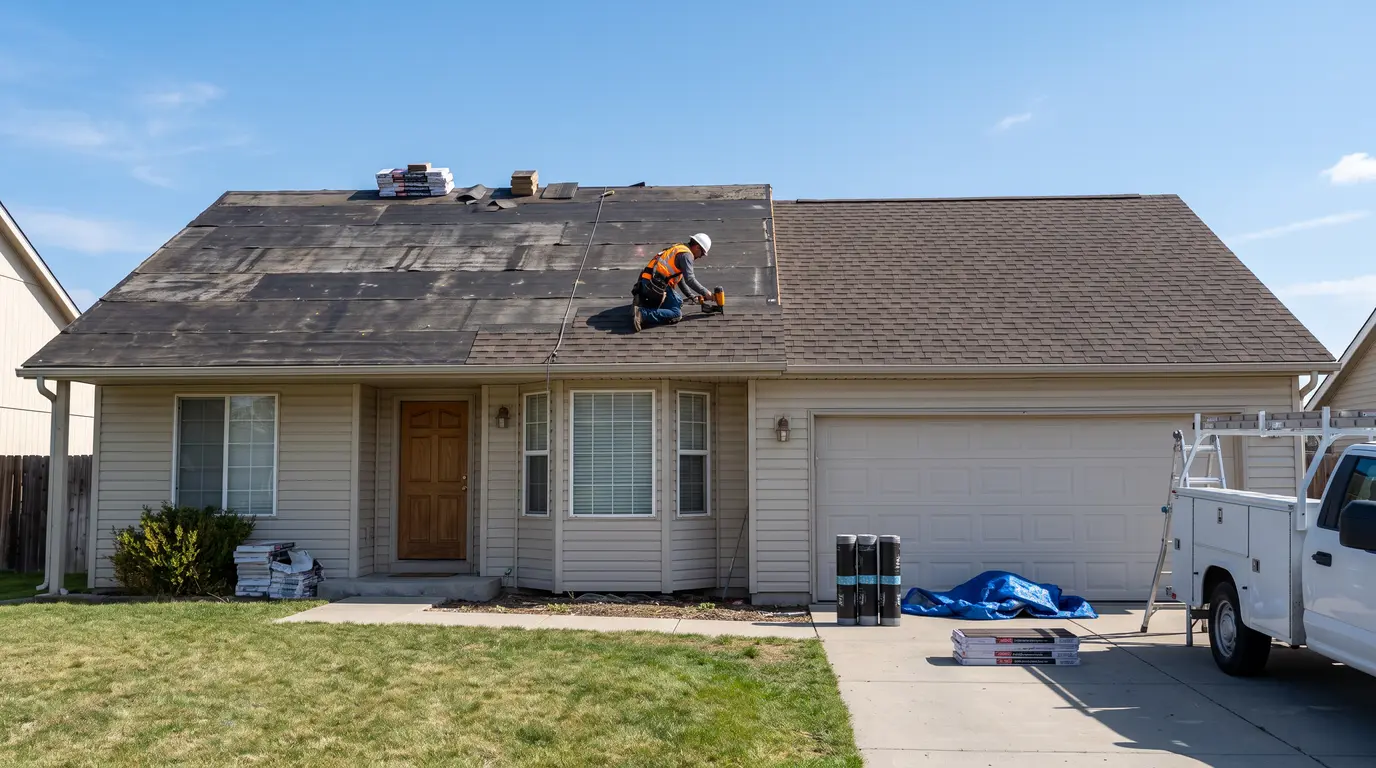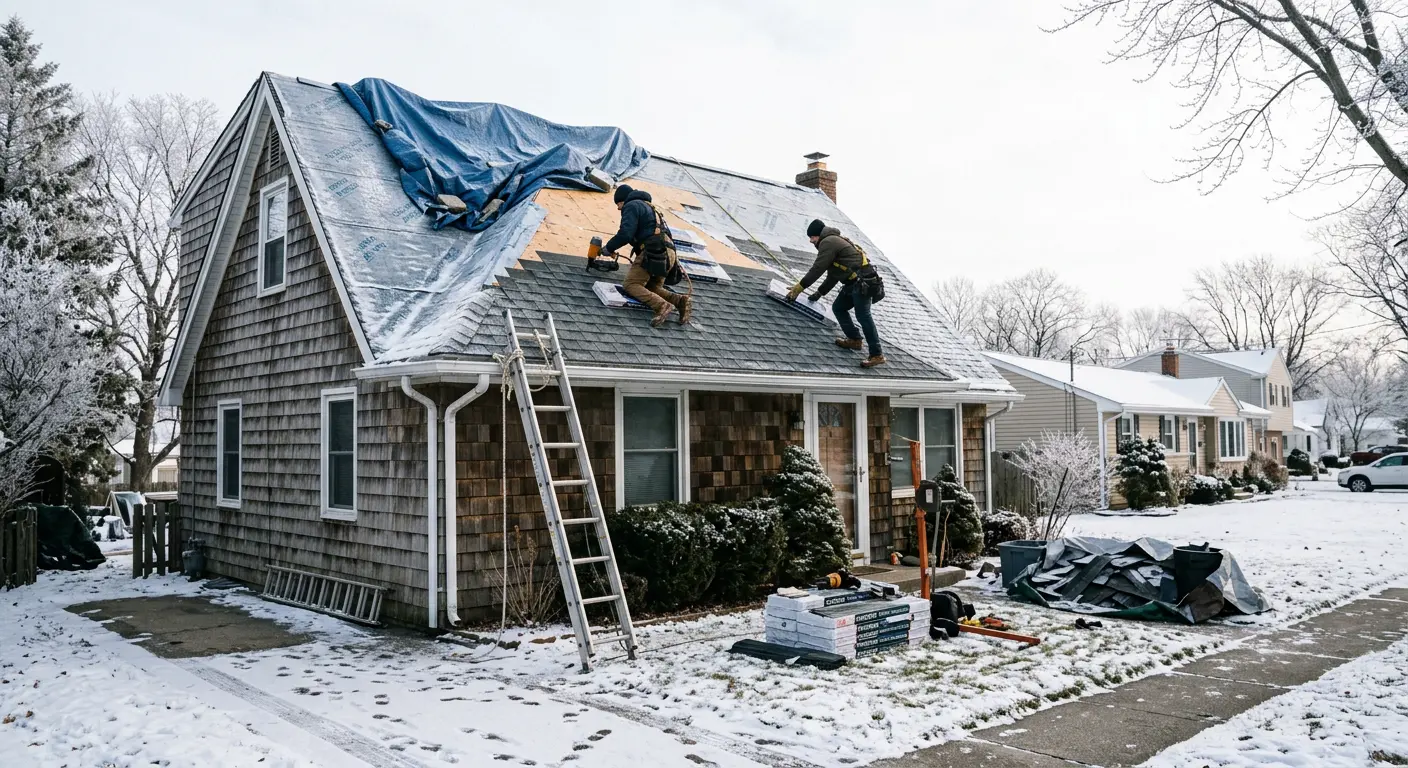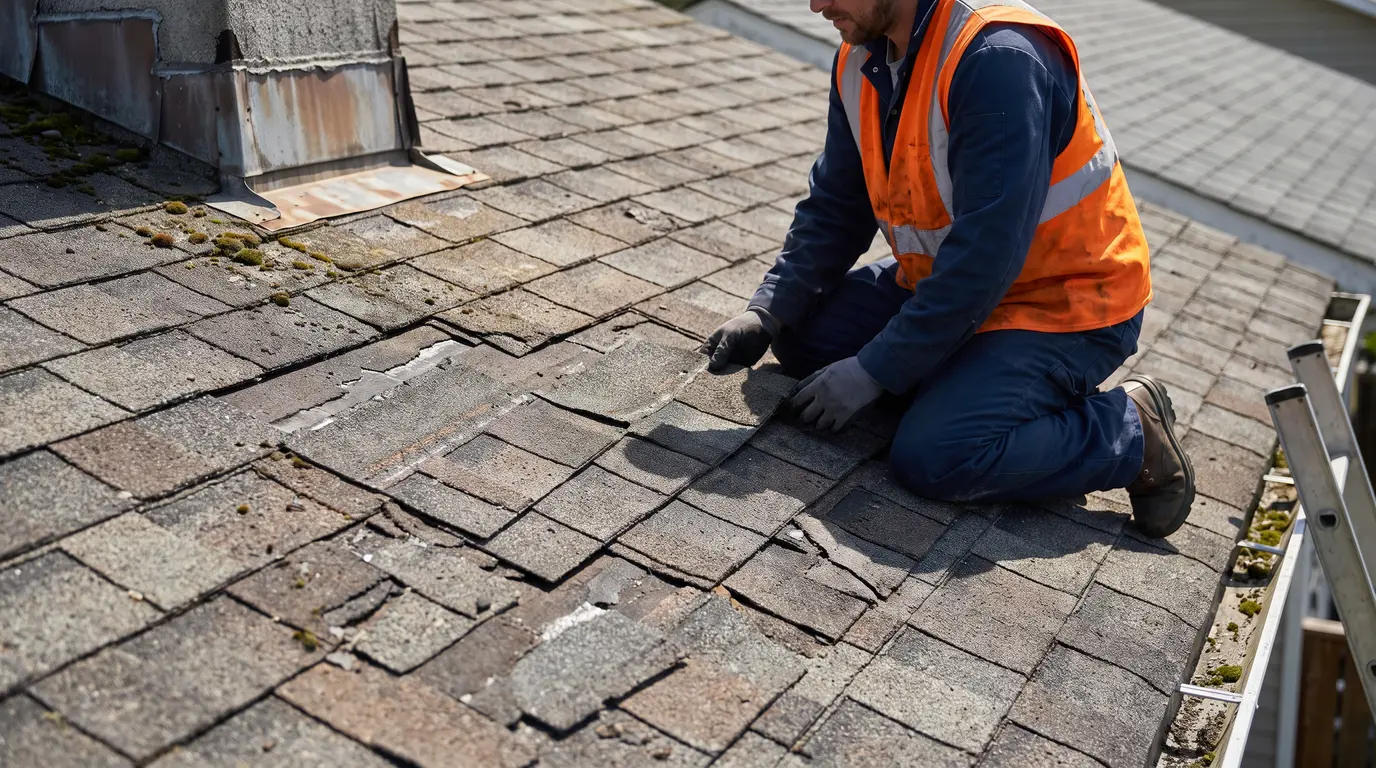
A localized leak does not automatically mean you need a new roof. Repair is usually the better choice when the damage has an identifiable source, affects a limited area, and the rest of the roof system remains sound. Replacement deserves stronger consideration when deterioration is spread across multiple areas, leaks keep returning, the roof is near the end of its useful service life, or concealed materials such as decking and structure are compromised.
The first step is a diagnosis, not a preference for repair or replacement. A qualified roof evaluation should look at the roof covering, flashing, drainage, underlayment, accessible decking, and attic conditions. Roof age and one visible symptom can help frame the decision, but neither one tells the whole story.
| Option | Conditions that support it | Main advantage | Important limitation |
|---|---|---|---|
| Repair | Localized damage, an identifiable leak source, sound roof covering and underlying components, and useful service life remaining | Addresses the affected area with less scope and disruption than a full replacement | May not be durable or economical if the roof is broadly deteriorated or near the end of its useful life |
| Replace | Widespread deterioration or damage, recurring leaks, a roof near the end of its expected service life, or concealed decking or structural problems | Provides a new roof system and addresses broader aging or failure | Larger project scope, cost, and disruption, with the estimate needing to clarify which components are included |
Start with the source and extent of the problem
A roof problem should be measured by the affected area or slope, not just by the most noticeable defect. One damaged shingle or one failed flashing detail may support a repair when the surrounding roof remains in generally sound condition. Damage that appears across several slopes or in multiple vulnerable locations points to a larger condition that a small patch may not address.
Water can enter through valleys, roof penetrations, flashing, and roof wall intersections. It may then travel before appearing as a ceiling stain or damp spot inside the home. That means the place where you see water may not be the place where it entered. Replacing visible shingles without identifying the source can leave the underlying problem unresolved.
For more homeowner guidance on distinguishing visible damage from a deeper roofing or sheathing problem, see whether roof damage is actually serious. It can help you prepare for an inspection, but it is not a substitute for one.
Repair makes sense when the roof still has useful life
A repair is most defensible when the problem is limited and the rest of the roof system is performing reasonably well. The work might involve replacing damaged roofing components, correcting flashing, or addressing another specific source of water rather than removing the entire roof.
The practical question is not simply whether a repair costs less today. Ask what remaining service life the repair is expected to support compared with the cost and scope of replacement. A low upfront cost may be less useful if the roof is already broadly deteriorated. On the other hand, replacing a generally sound roof because of one localized defect may create unnecessary work and expense.
Replacement becomes more sensible as deterioration spreads
Replacement deserves closer consideration when damage or deterioration appears across multiple areas, leaks recur, or the roof covering is near the end of its expected service life. A tear off may also reveal wet or deteriorated decking that was not visible from the ground. In that situation, replacing only the visible surface may not address the condition of the roof system below it.
A roof replacement estimate should make the project scope clear. Ask whether it includes flashing, underlayment, decking allowances, permits, ventilation work, disposal, and cleanup, or whether some of those items are separate. You can also review whether roof replacement includes decking before comparing estimates. Decking is not automatically included in every replacement estimate, and its condition may only become clear during the work.
Roof age matters, but it is not an automatic replacement trigger
Residential roofs do not all reach replacement age at the same time. The National Roofing Contractors Association says most new roofs are designed to provide useful service for about 20 years, while slate, clay tile, and certain metal roofs may last longer. Climate, environmental exposure, design, material quality, installation, and maintenance also affect how long a particular roof remains serviceable. You can review how long different roofing materials last for broader planning information.
Those figures are planning benchmarks, not a guarantee for an individual roof. An older roof with limited, repairable damage may not require immediate replacement. A younger roof with widespread deterioration or concealed moisture problems may need more extensive work. The roof’s actual condition should carry more weight than age alone.
For a safe preliminary look, use ground level observations, binoculars, camera zoom, and interior checks for stains or moisture. Do not climb onto the roof to investigate. NRCA guidance explains that most roof work should not be performed by homeowners because falls can cause serious injury and improper techniques can damage the roof. A ground level check can help you describe what you see, but it cannot assess every concealed condition.
You can also review how to check your roof without climbing before arranging a professional evaluation.
Compare the whole project, not just the first number
The least expensive option on paper is not always the most useful option for the home. Compare the repair cost with the expected remaining usefulness of the existing roof, then compare that result with the scope and expected service life of replacement. The estimate should explain what is being repaired, what is being replaced, and which conditions could add work once materials are removed.
A useful question to ask is: What specific evidence shows that repair will provide a reasonable remaining service life compared with replacement? Another is: Does the estimate include flashing, underlayment, decking allowances, permits, ventilation work, disposal, and cleanup, or are those separate? Clear answers make it easier to compare two different scopes instead of comparing two headline prices that cover different work.
For preliminary budgeting, the roof cost calculator can help you estimate a residential roofing cost and compare repair or replacement scenarios. It is a planning tool, not a contractor quote or a condition assessment, and it may not account for every roof design or concealed repair.
Check insurance before assuming a claim will pay
Homeowners insurance generally covers roof damage caused by a covered sudden event such as wind, hail, or a falling tree. Standard policies generally do not cover routine wear, poor maintenance, or gradual deterioration. Roof age and condition can also affect underwriting and whether a payment is based on replacement cost or actual cash value.
Before assuming insurance will pay for an old roof, confirm the cause of damage, deductible, valuation method, exclusions, and claim procedures in your policy. Ask whether the insurer requires an inspection or specific documentation. Coverage varies by policy, insurer, location, and the facts of the damage. You can read more about whether insurance may cover roof replacement, then confirm the details with your insurer.
Plan roof work around solar when needed
If rooftop solar is installed or planned, roof timing becomes part of the decision. The Department of Energy notes that residential solar panels commonly have a service life of about 25 to 30 years. When a roof is already near replacement, coordinating roof work before solar installation may help avoid planning around an aging roof later. Confirm whether existing panels would need removal and reinstallation as part of the roofing project.
For that specific planning question, see whether to replace your roof before solar. The solar service life figure is a broad planning benchmark, not a guarantee for a particular roof or system.
Questions homeowners commonly ask
Can a roof leak be repaired without replacing the whole roof?
Yes, when the leak has an identifiable source and the affected area is limited while the surrounding roof system remains sound. The evaluation should determine whether the problem is in the roof covering, flashing, underlayment, decking, or another component.
Does an old roof always need to be replaced?
No. Age is one decision factor, not an automatic replacement trigger. Material, climate, installation, maintenance, and actual roof condition determine how much useful service life remains.
Should I replace my roof before installing solar panels?
If the roof is already near replacement, address its condition before coordinating solar. Solar panels commonly have a service life of about 25 to 30 years, so confirm the roof timing and whether panel removal and reinstallation would be needed.
Make the decision from the roof's actual condition
Repair is usually the sensible path when damage is localized, the source is understood, and the remaining roof is generally sound. Replacement is more appropriate when deterioration is widespread, leaks recur, service life is limited, or concealed components are compromised. Arrange an evaluation that identifies the source, affected areas, and included project scope before committing to either option. That information gives you a practical basis for choosing the work your home actually needs.